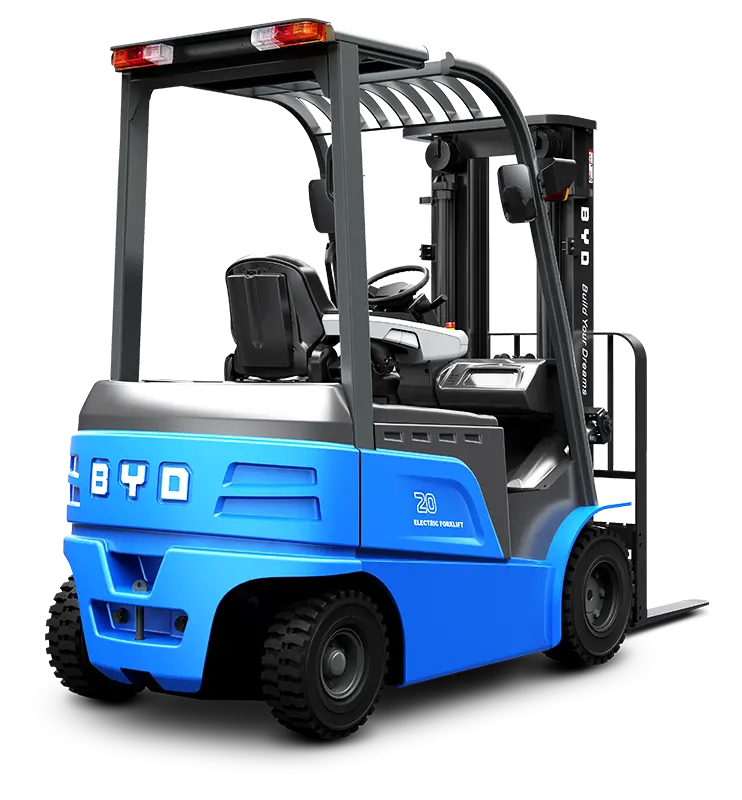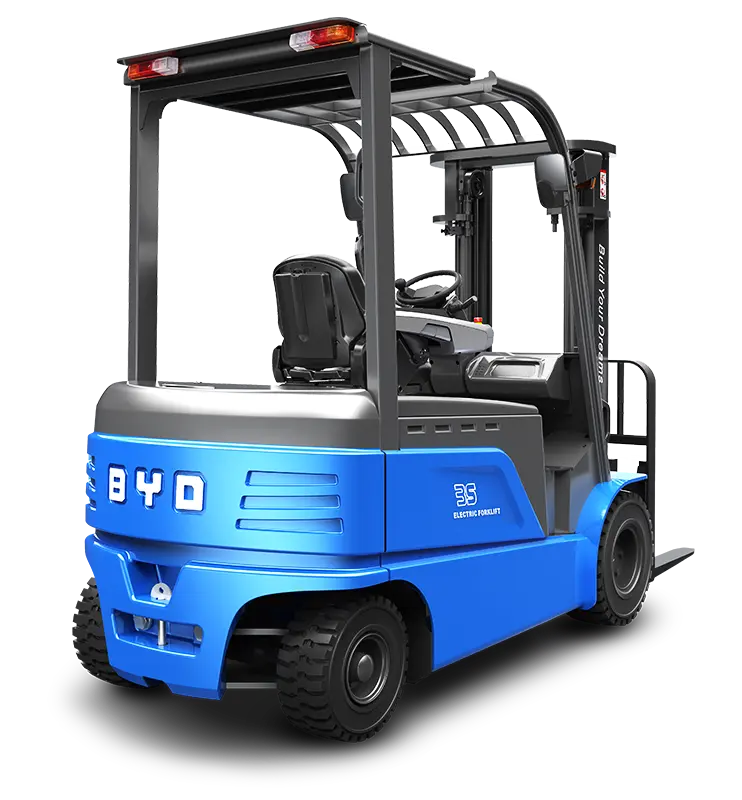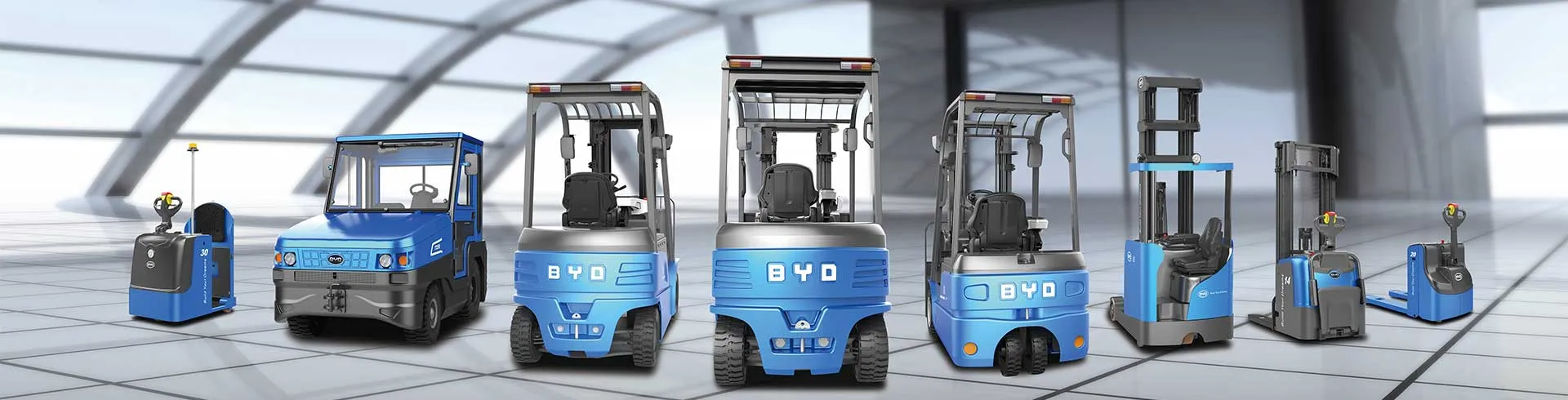
With the rapid development of the e-commerce industry, warehousing and logistics is the core link of the supply chain, and its operation efficiency directly affects the order performance ability. Especially during the promotion period such as 618 and Double 11, high-frequency and multi-shift warehousing operations demand higher requirements for equipment. Lithium-ion forklifts have become the mainstream choice for e-commerce warehousing due to their advantages of green environmental protection, stable power, and convenient maintenance. However, how to accurately configure according to the actual operation scene to avoid efficiency loss or cost waste due to improper selection is a problem that warehouse managers need to pay attention to.
First, clarify the core requirements for high-frequency multi-shift operations
The high-frequency multi-shift operation of e-commerce warehousing usually has the characteristics of large order fluctuations, high operation density, and long continuous operation time. For example, an e-commerce warehouse in a certain area processes more than 10,000 orders per day, and needs to cover multiple shifts such as morning shift, middle shift, evening shift, and even night shift, and the equipment needs to maintain stable operation throughout the day. In this scenario, traditional fuel forklifts are gradually limited due to noise pollution, exhaust emissions, and slow start-up response, and the advantages of lithium-electric forklifts are more prominent. However, when it comes to selection, the following needs need to be paid attention to:
1. Battery life and charging efficiency
In high-frequency operations, the forklift has a long single operation time and many round trips, and the battery life directly determines the continuity of the operation. If the battery capacity is insufficient, frequent charging will interrupt the rhythm of the operation, especially when switching between multiple shifts, charging waiting may lead to a backlog of orders. Therefore, it is necessary to calculate the battery life demand based on the data such as the operation time of a single shift, the single handling distance, and the weight of the goods. For example, if a single shift is 8 hours, a single full charge can support about 120 standard handling (1 ton per load), it is necessary to ensure that the battery life under this load is not less than 8 hours, and at the same time support fast charging to meet the fast replenishment demand between shifts.
2. Dynamic performance and operating efficiency
High-frequency operation requires the forklift's power response speed, climbing ability, and handling speed. In narrow passages, forklifts with a small turning radius can reduce steering time; when handling heavy objects, the motor torque needs to be sufficient to overcome the inertia of the goods and avoid the operation stagnation due to insufficient power. In addition, the instantaneous power output of lithium-electric forklifts is stable, and there is no acceleration lag of the fuel engine, which can more accurately control the handling speed and improve the overall operation fluency.
3. Equipment reliability and maintenance costs
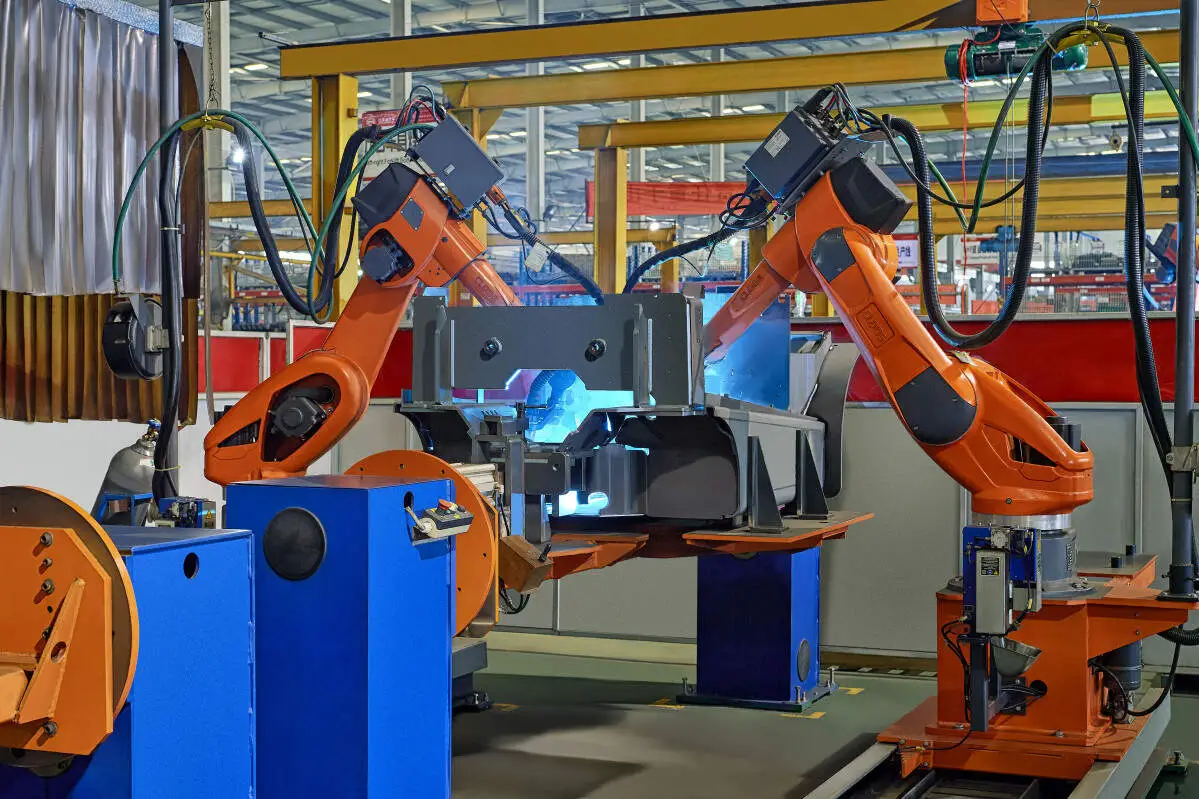
Under multi-shift operation, equipment failure may directly lead to storage paralysis. Lithium forklift battery cycle life, motor and transmission parts durability need to be taken into account. For example, a forklift with lithium iron phosphate battery has a cycle life of more than 2,000 times, which can meet the long-term use needs of an average of 100 operations per day; at the same time, lithium forklifts do not require complex fuel system maintenance, and only need to check battery status, tire wear, etc. on a daily basis, and maintenance costs can be reduced by more than 30%.
Analysis of core selection elements
#(1) Battery system: the key to determining the continuity of operations
Batteries are the core of lithium-ion forklifts, and their capacity, type, and charging scheme directly affect the rhythm of the operation. At present, the mainstream lithium-ion forklift batteries include ternary lithium batteries and lithium iron phosphate batteries. Ternary lithium batteries have high energy density and are suitable for short-distance and high-frequency operations; lithium iron phosphate batteries have long cycle life and higher safety, and are suitable for multi-shift heavy load scenarios. When configuring, it is necessary to choose according to the actual situation: if the warehouse channel is narrow and the handling distance is short (< 50 meters), batteries with high energy density can be given priority; if long-distance continuous operation (> 100 meters) or multi-shift rotation is required, lithium iron phosphate batteries are more suitable.
(2) Body and structure: details of adapting to storage scenarios
E-commerce warehouses are mostly designed with high shelves and dense passages, and the size of the forklift body needs to match the width of the passage and the spacing of the shelves. For example, narrow-channel warehouses are suitable for forward-moving forklifts with a turning radius of ≤1.5 meters to avoid channel congestion; pallet trucks need to pay attention to whether the width of the fork is suitable for standard pallets (such as 12001000mm) to reduce the loading and unloading time of the goods. In addition, the weight and load capacity of the forklift need to be balanced: too light may lead to ground pressure loss, and too heavy will affect energy consumption and flexibility. The appropriate weight needs to be selected according to the warehouse ground load (such as concrete ground load ≥3 tons/m2).
#(3) Intelligent configuration: an invisible help to improve operation efficiency
Modern warehouse lithium forklifts are gradually incorporating intelligent technologies, such as intelligent power management systems that can display the remaining power in real time to help drivers plan their work routes rationally; electronic power steering systems reduce operation effort and reduce long-term work fatigue; Bluetooth connection functions support data upload, which is convenient for warehouse management systems to monitor equipment status in real time. Although these configurations do not directly affect handling efficiency, they can indirectly improve overall operation fluency by reducing human error and optimizing operation processes.
Scenario-based configuration suggestions
#(1) Small and medium-sized e-commerce warehouse (average daily order < 5000 orders)
This kind of warehouse space is relatively limited, and the operation is mainly pallet handling and loading and unloading trucks. A 1-2 ton counterweight lithium battery forklift can be preferred, and it is matched with a lithium iron phosphate battery (capacity 50-60Ah) to support 8 hours of continuous operation. At the same time, it is recommended to configure 2 spare batteries to achieve seamless switching between "charging one and working one" to avoid affecting efficiency due to charging interruptions.
#(2) Large e-commerce warehouse (average daily orders > 10,000 orders)
Large warehouses need to cope with high-density storage and high-frequency turnover, and can adopt a combination of "main model + auxiliary model": the main force chooses a forward-moving lithium battery stacker (lifting height 6-10 meters) to meet the access needs of high-rise shelves; auxiliary configuration of handling trucks and picking trucks to achieve efficient cooperation between short-distance handling and manual picking. The battery system needs to support fast charging function (1-2 hours full charge), and is equipped with an intelligent charging cabinet to centrally manage battery status and reduce manual intervention.
IV. Summary: Starting from demand, matching equipment value
The selection of lithium-ion forklifts for e-commerce warehousing is essentially to find a balance between "operation requirements" and "equipment performance". In the high-frequency multi-shift operation scenario, it is necessary to prioritize the three cores of battery life, power stability, and maintenance convenience. Combined with details such as warehouse size, shelf structure, and order characteristics, select the appropriate battery type, body size, and intelligent configuration. At the same time, it is necessary to avoid blindly pursuing "high-end configuration", but to "meet current needs + reserve future expansion" as the principle to ensure long-term equipment investment and business development.
Through scientific selection, lithium-ion forklifts can not only solve the environmental protection and efficiency pain points of traditional equipment, but also provide a solid guarantee for the efficient operation of e-commerce warehousing through stable and reliable operation support.