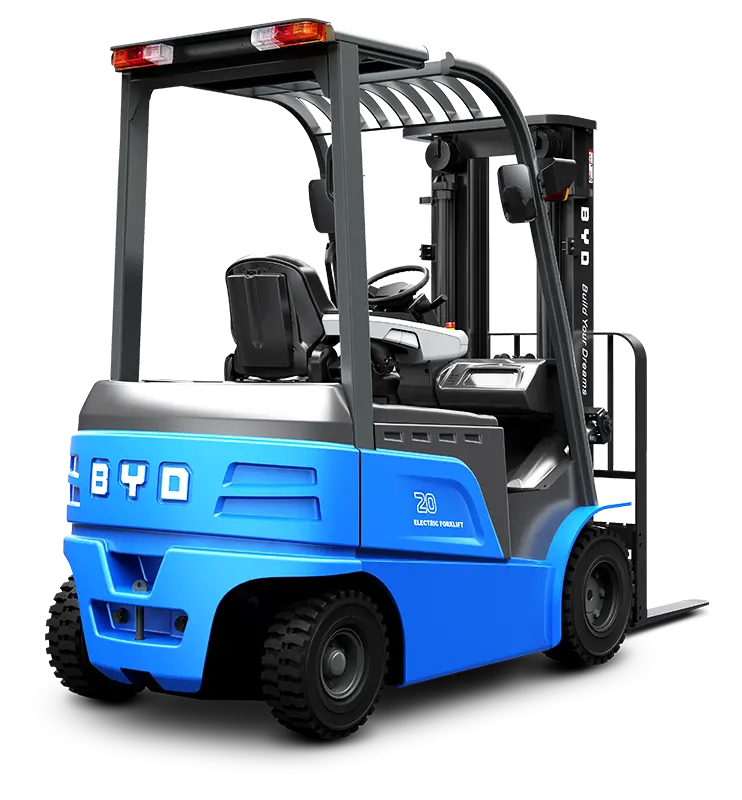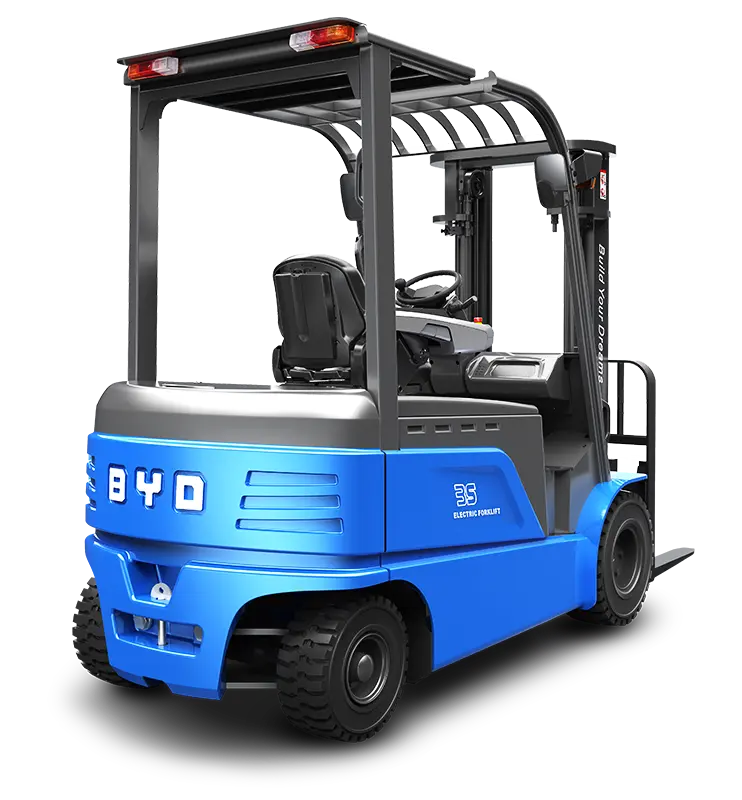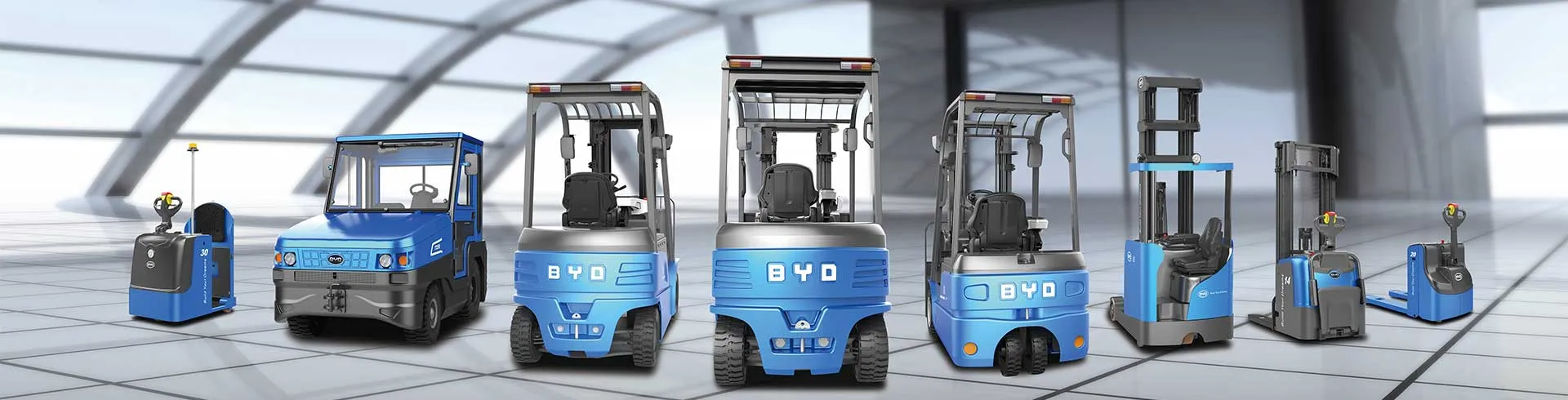
Electric forklifts are important equipment for warehousing and logistics, and the battery performance of their power source directly affects the operation efficiency and cost. Although traditional lead-acid batteries have the characteristics of low initial cost, they face problems such as frequent maintenance, large weight, and limited lifespan in long-term use. In recent years, lithium batteries have gradually become a popular choice for forklift battery upgrades due to their advantages of lightweight, long life, and low maintenance. So, whether lead-acid forklifts can be safely and reliably converted into lithium batteries, what points need to be paid attention to in the modification process, and how to control the cost? This article will analyze from four dimensions: feasibility, process, cost, and pit avoidance to provide an objective reference for forklift users.
Feasibility Analysis of Replacing Lead-acid Forklift with Lithium Battery
The limitations of lead-acid batteries
Lead-acid batteries have been used in the field of electric forklifts for many years, but their inherent characteristics make it increasingly difficult to meet the efficient needs of modern logistics. First, lead-acid batteries are heavier, usually 30% to 50% heavier than lithium batteries of the same capacity, which will increase the load of the forklift, especially in frequent handling operations, which may lead to an increase in energy consumption and affect the battery life. Second, the maintenance cost is high, the electrolyte level needs to be checked regularly during use, distilled water is replenished, and the risk of battery liquid leakage may lead to safety hazards. In addition, lead-acid batteries have a short cycle life, generally 300 to 500 charge and discharge cycles. If the forklift operates more times a day, the replacement cycle may be shortened to 1 to 2 years. In the long run, the comprehensive cost is not superior.
The advantages of lithium battery adaptation
Compared with lead-acid batteries, lithium batteries show the advantages of being suitable for forklift use in many dimensions. First, the weight advantage is significant. Under the same capacity, the weight of lithium batteries is only 1/3 to 1/2 of that of lead-acid batteries, which can effectively reduce the load during forklift operation and improve the overall operation flexibility. Second, the cycle life is longer. The number of cycles of high-quality lithium batteries can reach 1500 to 2000 times or more. If calculated by charging and discharging once a day, the service life can be extended to 4 to 5 years, reducing the frequency of replacement. Third, the maintenance requirements are extremely low. Lithium batteries do not need to be replenished regularly or check the electrolyte, and have overcharge and overdischarge protection functions, which is safer. In addition, the lithium battery supports fast charging technology, which can restore power in a short time and adapt to multi-shift continuous operation scenarios. Overall, as long as the forklift parameters and lithium battery characteristics are reasonably matched, the conversion of lead-acid forklifts to lithium batteries is highly feasible.
The specific process of lithium battery modification
Preliminary parameter evaluation and requirement confirmation
Before modification, it is necessary to comprehensively sort out the forklift usage scenarios and battery requirements. First, clarify the primary battery parameters of the forklift, including rated voltage (commonly 24V, 36V, 48V, etc.), capacity (such as lead-acid batteries marked as 50Ah), charging interface type and charging machine power. Secondly, evaluate the actual operation requirements, such as daily working hours, single operation mileage, charging time limit, etc., and calculate the required lithium battery capacity accordingly. For example, if the forklift needs to travel 5 kilometers in a single operation, the average current is 10A, and the daily operation is 8 hours, considering the 15% margin, the lithium battery capacity can be preliminarily determined to be more than 50Ah (need to be converted in combination with the voltage). At the same time, it is necessary to check the internal space size of the forklift battery compartment to confirm whether the lithium battery pack can be accommodated to avoid heat dissipation or wiring problems due to insufficient installation space.
Battery and system adaptation check
After completing the parameter evaluation, the lithium battery pack needs to be selected and adapted for verification. The lithium battery needs to strictly match the rated voltage of the forklift to avoid circuit failure or power shortage due to voltage mismatch. For example, the 24V lead-acid battery system should choose a 24V lithium battery pack instead of a 36V or 48V product. At the same time, it is necessary to pay attention to the size and weight of the battery pack to ensure that it can be installed smoothly in the primary battery compartment, and the weight does not exceed the upper limit of the forklift load-bearing design. In addition, the protection plate of the lithium battery pack needs to be fully functional, with over-current, over-voltage and short-circuit protection to ensure safe use. If the original forklift charging system supports lead-acid batteries, it is necessary to check whether the charger is compatible with the lithium battery charging protocol, and replace the special charger if necessary to avoid the battery life due to mismatch of charging parameters
Installation and commissioning key steps
Before installation, the forklift circuit needs to be checked for safety, and to ensure that it is operated in a power-off state to avoid the risk of electric shock. When the battery pack is installed, it needs to be wired according to the corresponding positive and negative electrodes, and connected to the forklift circuit using insulated terminals. Fixing and insulation treatment should be done to prevent the wiring from loosening due to vibration. The battery pack should be placed in a position to reserve heat dissipation space to avoid high temperature environment affecting battery performance. If necessary, a heat sink can be installed. After the installation is completed, system debugging needs to be carried out, including charger test (confirm that the charging is normal and there is no abnormal heat generation), forklift operation test (observe whether the power output is stable and the power display is accurate), load test (simulate the full load operation scenario to check whether the battery life is up to standard). If any abnormality is found during the debugging process, it is necessary to
Security verification and practice running
After the installation and commissioning are completed, at least 24 hours of practice running observation is required. Focus on the performance of the battery pack under different working conditions, such as temperature changes during continuous operation, charging efficiency during charging, and power response when the forklift starts and stops. If there are problems such as battery bulging, short circuit, and abnormal power display during practice running, you need to stop using it immediately and check the cause of the failure. If necessary, contact professional technicians to assist in handling it. After the practice run is qualified, it can be officially put into daily use, and a battery usage ledger can be established to record the number of charges, cruising range and other data to provide reference for subsequent maintenance.
Modification cost structure and long-term benefit analysis
Initial input cost breakdown
The initial cost of modifying a lithium battery for a lead-acid forklift mainly includes the cost of the battery pack, installation service fees, and other supporting costs. The price of lithium battery packs varies greatly due to capacity and voltage. Taking a common 48V system as an example, the price of a lithium battery pack with a capacity of 50Ah is about 3,000 yuan to 8,000 yuan, depending on the battery type (lithium iron phosphate, ternary lithium, etc.) and performance parameters. In terms of installation service fees, if you install it yourself and there is no need for additional accessories, you can save labor costs; if you entrust it to a professional to operate, the cost usually ranges from 500 yuan to 1,500 yuan. In addition, if the original charger is not compatible with the lithium battery, you need to replace the special charger, which costs about 500 yuan to 1,000 yuan. Compared with the initial cost of lead-acid batteries (usually 1,000 to 3,000 yuan), lithium batteries have a higher initial investment, but the advantages are obvious in long-term use.
Long-term cost comparison
From a long-term perspective, the comprehensive cost advantage of lithium batteries is significant. Lead-acid batteries have a short cycle life, usually need to be replaced every 1 to 2 years, and the average annual replacement cost is about 1,500 to 2,000 yuan; while lithium batteries have a cycle life of 3 to 5 years, and the average annual replacement cost is only 1/3 to 1/2 of lead-acid batteries. Lead-acid battery maintenance requires regular hydration and electrolyte inspection. The cost of each maintenance is about 200 to 500 yuan, and the life may be shortened due to improper maintenance; lithium batteries do not require maintenance, which greatly reduces labor and time costs. In addition, lead-acid batteries have a high self-discharge rate and need to be charged regularly when idle, while lithium batteries have a low self-discharge rate and can be stored for a long time with little power loss. Overall, if the forklift's annual operating hours exceed 2,000 hours, the total cost of a lithium battery pack in three years may be lower than the total cost of a lead-acid battery in two years, making long-term use more economical.
Key points of refitting pit avoidance
Matching voltage and capacity is a core premise
Some users tend to ignore the precise matching of voltage and capacity when refitting, resulting in insufficient power or shortened battery life of the forklift. For example, choosing a lithium battery with a lower voltage than the original lead-acid battery will slow down the forklift's driving speed and reduce its climbing ability; if the capacity is too high, it may affect the use due to weight increase or insufficient installation space. It is recommended to confirm the primary battery parameters through the forklift manual or professional testing equipment before refitting to ensure that the lithium battery voltage, capacity and size match the forklift system. If necessary, consult professional technicians for parameter calculation.
Charging system compatibility requires key verification
Lithium batteries have specific requirements for charging equipment. If a lead-acid battery charger is used directly, the battery may be overcharged or undercharged due to mismatch of charging current and voltage parameters, which will seriously affect the cycle life. When modifying, you need to choose a charger that supports the lithium battery charging protocol. Some high-end charging machines can automatically identify the battery type and adjust parameters to ensure safe and efficient charging. At the same time, it is necessary to check whether the power of the charger meets the charging needs of the lithium battery to avoid excessive charging time or battery heating due to insufficient power.
Installation space and structural adaptation cannot be ignored
Some forklift battery compartments are designed to be compact. If the lithium battery pack is too large or the weight exceeds the load-bearing range, forced installation may lead to structural deformation or safety hazards of the forklift. Before modification, measure the internal size of the battery compartment to confirm whether the lithium battery pack can be placed smoothly. If necessary, the battery compartment can be slightly modified (such as adjusting the position of the fixed bracket). In addition, the battery pack needs to reserve heat dissipation space after installation to avoid high temperature environment affecting the battery performance. It can be solved by installing a cooling fan or choosing a battery shell with good heat dissipation performance.
Battery quality and after-sales guarantee are key
The quality of lithium battery products on the market is uneven. Low-priced and inferior batteries may have problems such as false capacity labels and imperfect protection board functions, resulting in actual battery life far below the nominal value. It is recommended to choose a lithium battery supplier that has been certified by the industry and has a perfect after-sales system. It is required to provide quality assurance agreements and instructions to clarify the scope and duration of quality assurance. At the same time, all certificates in the modification process need to be retained to facilitate retrospective responsibility in the event of subsequent problems.
Ignoring the original circuit inspection of the forklift is easy to leave hidden dangers
Some users directly rewire the forklift without checking whether the original circuit of the forklift has aging, short circuit and other problems, which may lead to frequent circuit failures after the modification. Before the modification, a comprehensive inspection of the forklift circuit system is required to ensure that the terminals are firm, the insulation layer is intact, and the aging line is replaced if necessary. In addition, the grounding protection of the battery pack and forklift needs to be strictly standardized to avoid electric shock or equipment damage due to poor grounding.
The modification of lead-acid forklifts to lithium batteries is a feasible upgrade plan, especially suitable for scenarios with high requirements for operation efficiency and maintenance costs. The modification process needs to focus on parameter matching, and complete the preliminary evaluation, selection, installation and debugging step by step, while paying attention to the balance of cost and safety. Through reasonable modification, the forklift can achieve power improvement, life extension, maintenance simplification, and long-term use is more economical. Users should fully understand their own needs and forklift characteristics before modification, and choose a professional plan to avoid affecting the use effect due to parameter mismatch or improper installation.