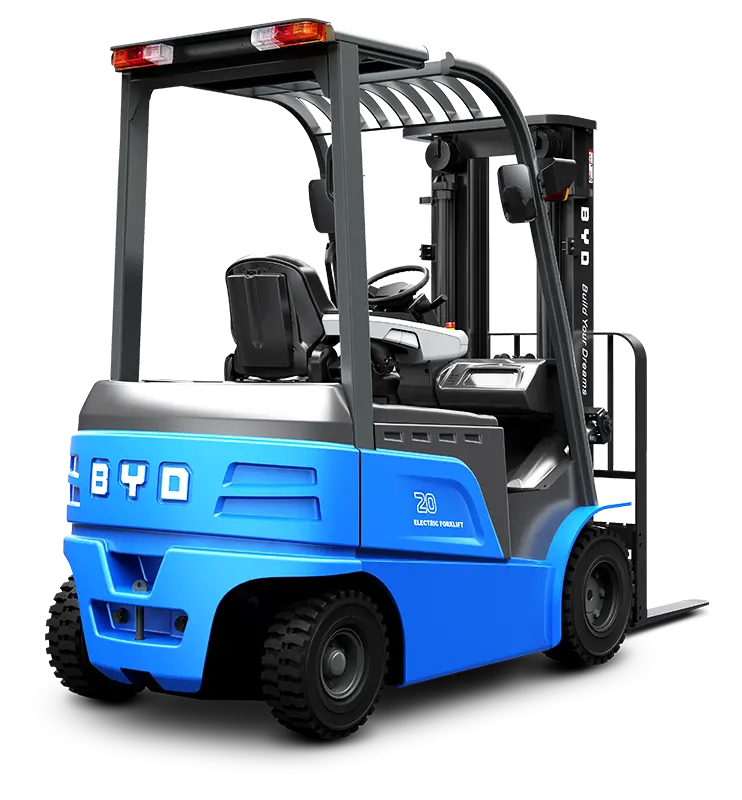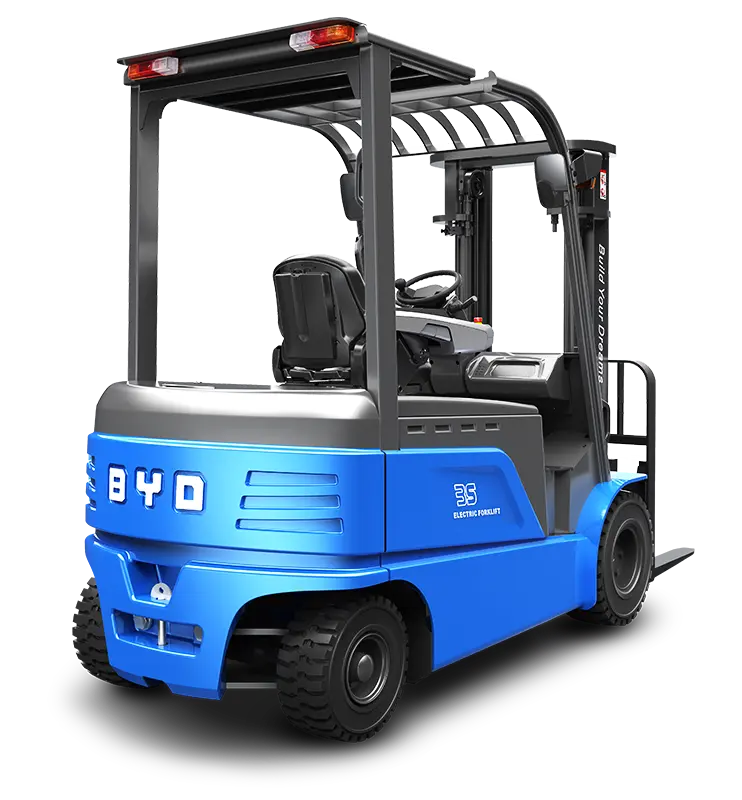
In the factory heavy-duty material handling scene, electric forklifts over 3 tons have gradually become the core equipment to replace traditional internal combustion forklifts due to their environmentally friendly and efficient characteristics. Scientific selection and adaptation can not only improve handling efficiency, but also reduce long-term operating costs.
Core basis for selection
Load matching to operating conditions
Selection should first consider the maximum load requirements of actual handling, and a reasonable safety margin should be reserved to avoid long-term overload operation affecting the life of the equipment. At the same time, combined with the handling distance and operating frequency of the operation scene, if long-term continuous operation is required, a configuration with stronger endurance should be given priority; if multi-floor handling is involved, attention should be paid to the lifting height stability of the forklift.
Powertrain adaptation
The power system of an electric forklift with more than 3 tons needs to be selected according to the energy supply of the factory. If the factory charging facilities are complete, a fast-charging battery configuration can be selected; if there is no fixed charging point in the workplace, a power-changing mode equipment can be considered to ensure the continuity of the operation. In addition, the appropriate battery type needs to be selected according to the operating environment temperature to ensure stable performance in low or high temperature environments.
Body structure and spatial fit
The width and turning radius of the internal passage in the factory are important references for model selection. If the workshop passage is narrow, choose a model with a compact body and a small turning radius; if it involves outdoor heavy-duty handling, choose a higher chassis and stronger off-road performance configuration to adapt to the needs of uneven ground operations.
Factory heavy-duty handling adaptation ideas
scenario-based job configuration
According to different operating scenarios, an adaptation plan is developed: warehouse storage scenarios need to focus on the lifting accuracy and stacking efficiency of forklifts; workshop assembly line handling needs to pay attention to the start-stop flexibility of forklifts to reduce the impact on the rhythm of the assembly line; outdoor material transfer needs to strengthen the protection level of equipment to resist external factors such as dust and rain.
Supporting facilities planning
In order to ensure the stable operation of electric forklifts, it is necessary to plan supporting facilities synchronously. Set up a dedicated charging area in the workshop or around the warehouse, equipped with charging equipment that meets safety standards; reserve enough space in the regular maintenance area to facilitate the repair and maintenance of the equipment. At the same time, establish a battery management mechanism to monitor the battery status and prolong the battery life.
Personnel operation and management adaptation
The operation of electric forklifts over 3 tons is difficult, and professional training needs to be provided for operators, covering equipment operation specifications, fault emergency treatment, etc. In addition, a sound Facility Management system is formulated, and forklifts are regularly inspected and maintained to ensure that the equipment is in good operating condition and reduce operational safety hazards.
Through the combination of the above selection scheme and adaptation ideas, the factory can choose a suitable 3-ton electric forklift truck according to its own heavy-duty handling needs to achieve efficient, safe and environmentally friendly material handling operations.