
2026-06-13

Lithium battery forklift daily maintenance guide, these 5 habits help extend battery life

Lithium forklifts are widely used in the field of warehousing and logistics due to their advantages of environmental protection and high efficiency. As its core power source, the service life of the battery directly affects the cost of equipment use and the continuity of operations. Scientific daily maintenance is the key to prolonging battery life. The following 5 practical habits, from daily inspection to standardized operation, help users effectively maintain the battery performance of lithium forklifts and reduce failure and replacement costs.

Habit 1: Regularly check the battery status and do daily health monitoring

In daily use, the health of the battery directly affects its service life and equipment operating efficiency. It is recommended that operators develop the habit of checking the battery status before daily operation: first observe the appearance of the battery to see if there is bulging, leakage or obvious corrosion marks in the shell. If any abnormalities are found, it is necessary to stop the machine in time for inspection; secondly, check the connection wiring harness to ensure that the electrode pile head is firmly connected to the cable without loosening or oxidation. It can be cleaned by surface oxides (such as using a clean cloth dipped in a small amount of distilled water to wipe) to maintain good contact; at the same time, pay attention to the power display system. If there is an abnormality in the display or the power drops too quickly, it may be a battery cell problem or poor connection. It needs to Regular inspections not only detect potential problems in a timely manner, but also avoid the rapid degradation of battery performance due to the accumulation of minor faults, laying the foundation for prolonging battery life.

Habit 2: Standardize the charging process to avoid overcharging or undercharging

Battery charging is a key link affecting the lifespan, and standardized charging operation can significantly reduce the aging speed of the battery. When using the matching charger, it is necessary to confirm in advance that the output parameters of the charger match the battery specifications to avoid abnormal charging due to incompatible parameters; check the battery temperature before charging. If the surface temperature of the battery exceeds 45 ° C, it should be stopped to cool to room temperature before charging; try to avoid forklift movement or vibration during charging to prevent uneven force on the internal plates of the battery; disconnect the power supply in time after being fully charged. Long-term plug-in storage may cause the battery to be overcharged, causing electrolyte evaporation and plate active substances to fall off, shortening the cycle life. In addition, if the forklift is idle for more than a week, it is recommended to use the "shallow charge and shallow discharge" method to charge, that is, to keep the battery power in the range of 30% -50% to supplement, to avoid long-term power loss leading to plate vulcanization.

Habit 3: Avoid deep discharge and maintain a reasonable range of battery power

Excessive deep discharge can cause irreversible damage to the battery plate, which is a common reason for shortening battery life. In daily operations, it should be avoided that the battery power is lower than 20% and still runs continuously. It is recommended to charge it in time when the power drops to 30%, and keep the battery in the safe use range of 20% -80%. The operator can judge the remaining battery power by observing the power meter or referring to the prompt information in the equipment manual, plan the operation route reasonably, and give priority to completing tasks with high power demand. If the operation environment is complicated and the power consumption is fast, a backup charging device can be equipped next to the battery to ensure that there is no low power shutdown in the middle. Maintaining a reasonable range of battery power can effectively reduce the vulcanization problem caused by deep discharge of the plate, and maintain the battery capacity and cycle times.

Habit 4: Control the ambient temperature and reduce the influence of external factors
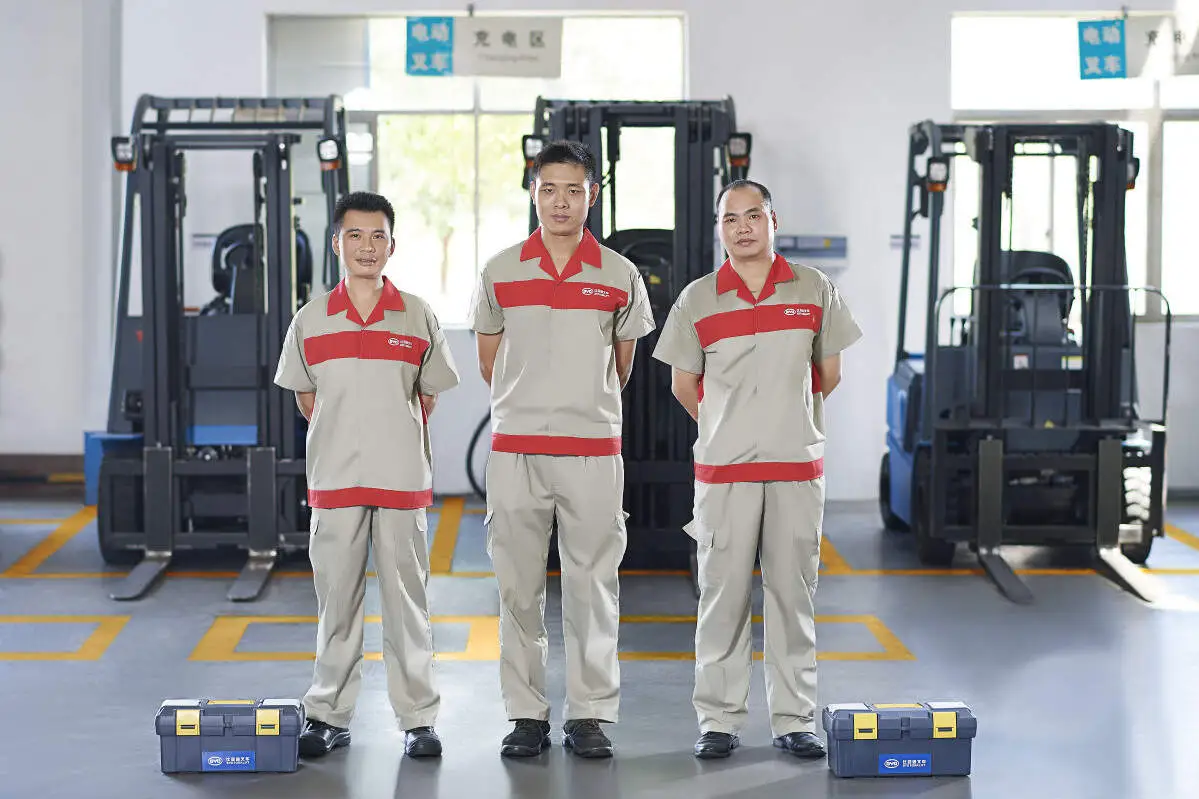
Lithium battery forklift daily maintenance guide, these 5 habits help extend battery life(Image1)

Ambient temperature has a significant impact on battery chemical reactivity. Excessive or too low temperature will accelerate battery aging. In high-temperature environments (such as open-air warehouse operations in summer), continuous high-intensity operations should be avoided. Stop for 10 minutes every hour of work to allow the battery to dissipate heat naturally, while ensuring that the battery surface is unobstructed and well ventilated; if the ambient temperature is lower than 5 ° C, the battery can be preheated before operation, or the forklift can be parked indoors for charging as much as possible to avoid low temperature causing electrolyte fluidity to decline and affecting battery charging and discharging efficiency. When storing the forklift for a long time, the battery needs to be fully charged and placed in a dry environment at 15-25 ° C, and the power should be replenished regularly (every 15 days) to prevent the battery from self-discharging to a power loss state A suitable temperature environment can reduce the change of the internal impedance of the battery and maintain stable charging and discharging performance.

Habit 5: Standardize operation and storage to reduce battery mechanical wear and tear

In addition to charging and discharging management, the operation mode and storage status of the forklift will also indirectly affect the battery life. Avoid sudden acceleration, sudden braking and frequent start and stop during operation to reduce the instantaneous high current shock of the battery; distribute the weight evenly when loading goods to avoid uneven force on the battery due to unilateral overload, which affects the stability of the internal structure; When the forklift is parked, the gear should be hung into neutral and the handbrake should be pulled up to avoid mechanical loss under the continuous power supply state of the battery. For forklifts that have been idle for a long time, it is recommended to disassemble the battery from the vehicle and store it separately. After it is fully charged, wrap the electrode pile head with insulating tape to prevent short circuits. At the same time, check the battery status once a month to ensure that the power is maintained at about 50 Standardized operation and storage can reduce battery wear and tear due to mechanical stress and environmental factors, prolonging its physical service life.

In short, the life of a lithium-ion forklift battery depends not only on the quality of the battery itself, but also closely related to daily maintenance habits. By developing the five habits of regular inspection, standardized charging, reasonable discharge, temperature control, and standardized operation, operators can effectively reduce the probability of battery failure and prolong its cycle life. It is recommended that users incorporate these habits into the daily management process, and flexibly adjust them in combination with the frequency of equipment use and environmental characteristics, which can not only ensure the efficient operation of the forklift, but also reduce maintenance costs in long-term use, and realize the sustainability of warehousing operations.
Telephone

WeChat

Whatsapp

E-mail address

We use cookie to improve your online experience. By continuing to browse this website, you agree to our use of cookie.

Cookies

Please read our Terms and Conditions and this Privacy & Cookie Policy before accessing or using our Services. If you cannot agree with this Policy or the Terms and Conditions, please do not access or use our Services.
If you are located within the European Economic Area (EEA), the United Kingdom or Switzerland (collectively “European Countries”), all processing of your personal data shall be governed by the General Data Protection Regulation (GDPR). If you are located in a jurisdiction outside European Countries, by using our Services, you accept the Terms and Conditions and accept our privacy practices described in this Policy.
As a resident of European Countries, you hold full statutory rights under GDPR: the right to access, rectify and erase your personal data, the right to data portability, the right to object to marketing tracking, the right to withdraw cookie consent at any time, and the right to lodge a complaint with your local data protection authority (DPA).
Your personal data collected via this website will be transferred and stored in China. We execute Standard Contractual Clauses (SCCs) approved by the European Commission to guarantee adequate data protection for European users regarding cross-border personal data transfer.
We may modify this Policy at any time. Minor adjustments will be updated with a new effective date displayed at the top of this document. If we make material changes to how we collect, use or disclose your Personal Information that limit your rights under GDPR, we will provide you with advance notice and obtain your separate explicit consent before implementing such revisions. Updated policy terms will not be retroactively applied to Personal Information collected prior to notification without your written approval.
In addition, we may provide you with real-time pop-up disclosures or supplementary information about the Personal Information handling practices of specific modules of our Services. Such notices shall supplement this Policy and offer you extra choices about how we process your Personal Information.

Cookies & Related Tracking Technologies

Cookies are small text files stored on your device when you access most websites on the internet or open certain marketing emails. For the purpose of this Policy, the term “Cookie” covers all equivalent tracking technologies with identical functions, including HTML tags, tracking pixels, web beacons, local storage and session storage.
Cookies enable our website to recognize your device and record your browsing history when you revisit our site. Typical data collected via Cookies includes your browser type, referral website address, IP address and clickstream behavior (pages viewed, links clicked).
We only automatically load Strictly Necessary Cookies upon your first site visit. All non-necessary Cookies (Functional, Performance, Targeting Cookies) will NOT be activated unless you submit your explicit, affirmative consent via our website cookie banner. You can adjust, restrict or fully withdraw your cookie preferences at any time via the fixed "Cookie Settings" button placed in our website footer, with immediate effect.
We deploy Cookies to simplify website navigation, deliver personalized user experience, supply matched industrial logistics equipment information, analyze website operation data, and deliver targeted BYD electric forklift advertisements across third-party platforms via our authorized marketing partners.
We classify Cookies into four standard categories as required by European ePrivacy regulations:
●  Strictly Necessary Cookies
●  Performance Cookies
●  Functional Cookies
●  Targeting Cookies

Detailed Introduction of Each Cookie Category

Strictly Necessary Cookies

These cookies are indispensable for basic website operation and cannot be fully disabled within our site system. They are only set in response to your voluntary service requests, such as saving your cookie privacy preferences, logging into accounts or filling in inquiry forms. You can configure your browser to block or alert you about these cookies, but core functions of the website will fail to work normally after blocking. These cookies only store temporary session data and do not record any personally identifiable information.

Functional Cookies

These cookies support enhanced personalized website functions, such as remembering your language preference, saved product browsing records and quote information. They may be set by us or trusted third-party service providers embedded on our pages. If you decline these cookies, partial or all personalized service modules cannot operate properly. Functional cookies will be automatically cleared after a maximum storage period of 12 months.

Performance Cookies

We use performance cookies (mainly from Google Analytics) to count visitor volumes and traffic sources, measure and optimize our website operating performance. These cookies help us identify the most and least popular product pages and track visitors’ browsing paths on our site. All data collected by performance cookies is fully aggregated and anonymized without linking to your individual identity, and tracking data will be retained for up to 26 months. If you reject these cookies, we cannot track website operation data or continuously upgrade our service experience for global warehouse and manufacturing clients.

Targeting Cookies

These third-party cookies are deployed through our website by our official advertising partners (Google Ads). The partners may use such cookies to build anonymized interest profiles based on your forklift browsing behavior and push relevant electric forklift promotional adverts on other websites. They do not directly store your personal identifiable information, but rely on unique identifiers of your browser and network device. Targeting cookies are stored for a maximum of 12 months. If you do not allow these cookies, you will only receive generic, non-industry targeted online advertisements. We will never share your complete browsing records with unrelated third parties for irrelevant commercial marketing.

How To Turn Off & Manage Cookies

  1. Adjust consent on our official website: Click the permanent "Cookie Settings" button in the website footer to check, modify or completely withdraw your consent for non-necessary cookies at any time.

  2. Browser privacy control: You can restrict, block or delete all Cookies permanently through your web browser’s privacy settings. Please note that clearing all existing Cookies will reset all your saved preferences on our website.

Restricting or blocking non-necessary Cookies will not stop you from browsing our forklift product catalog, but personalized content and targeted industrial equipment ads will be disabled. If you block Strictly Necessary Cookies, core website functions including inquiry form submission and privacy preference saving will be unavailable.

Cookies within Mobile Applications

We only adopt Strictly Necessary Cookies on our mobile applications. These Cookies are critical to guarantee basic operation of our apps; blocking or deleting them may make you unable to use core app functions. No personal identifiable information will be stored via mobile app Cookies, and app Cookie data will never be shared with other third-party applications installed on your mobile device.

Contact Information

If you have any questions, requests or concerns regarding any clauses in this Privacy & Cookie Policy or the processing of your personal data, please contact our dedicated data handler by email: 17399989919@163.com. You can also reach our professional customer service team via the online contact form available on our official website.