
2026-06-13

Precautions for charging lithium-ion forklifts: Can they be charged at any time? Is overcharging harmful?

With the wide application of electric forklifts in warehousing, logistics, factory handling and other scenarios, electric forklifts with lithium batteries as power sources have gradually become the mainstream due to their advantages of environmental protection, high efficiency and easy maintenance. The service life of lithium batteries is closely related to the charging method, and users are often concerned about "whether it can be charged at any time" and "whether it is harmful to overcharge". This article combines the characteristics of lithium batteries with actual operation specifications to answer relevant questions in detail and provide charging precautions.

First, the basic charging characteristics of lithium batteries

The charging and discharging mechanism of lithium batteries is different from that of lead-acid batteries. The charging process relies on the embedding and deembedding of lithium ions between the positive and negative electrodes. Modern lithium forklift batteries usually adopt a "shallow charge and shallow discharge" design, that is, the single charge and discharge amount is controlled between 20% and 80% of the battery capacity, which can effectively extend the cycle life. The battery management system (BMS) will monitor the voltage, current, temperature and other parameters in real time to ensure that the charging process is carried out within the safety threshold.

Second, can it be charged at any time?

#2.1 Feasibility of charging at any time

For most lithium-ion forklift batteries, it is feasible to charge at any time when the remaining battery power is not less than 20%. This is because lithium batteries do not have a "memory effect" and do not need to be booster charged after full discharge. Instead, frequent shallow charging is more in line with their chemical characteristics. For example, if the remaining power of the forklift after a single operation is 60%, charging at this time (charging to about 80%) can not only meet the needs of the next operation, but also avoid the aging of active substances caused by long-term deep discharge of the battery.

#2.2 Pay attention to the points of charging at any time

It should be noted that if the battery is deeply discharged due to unexpected conditions (such as less than 10% power), it should be avoided to charge immediately. At this time, the distribution of lithium ions inside the battery is uneven, and forced charging may cause some negative electrode materials to "precipitate lithium" (lithium ions cannot be embedded and deposited), which affects the battery capacity. It is recommended to perform a shallow discharge of 10% -20% first, and then start charging, or wait for the battery to recover naturally before operating.

Is overcharging harmful?

#3.1 The impact of overcharging on battery life

Overcharge refers to the battery charging time exceeding the full charge protection threshold set by the BMS (usually 4-6 hours, depending on the battery capacity). At this time, the lithium ions in the electrolyte inside the battery continue to be embedded in the positive electrode material, resulting in the negative electrode material not being "de-embedded" in time, causing the following problems:

Electrolyte decomposition: overcharging causes the temperature of the electrolyte to rise, and some organic solvents decompose to produce gas, resulting in battery bulging and leakage;

- Electrode structure damage: The positive electrode material falls off due to high-potential oxidation, and the negative electrode material forms "dendrites" due to excessive embedding, which may cause a short circuit after piercing the diaphragm;

Increased internal resistance: Changes in the electrode material structure increase the internal resistance of the battery, which is manifested as a decrease in battery life and charging efficiency.

#3.2 Security risks of overcharging

The battery temperature may exceed 50 ° C during overcharging. Although most lithium battery forklifts are equipped with temperature protection functions, it may still cause heat loss in extreme cases (low probability but need to be vigilant). In addition, leakage may corrode the forklift circuit or cause environmental pollution, affecting operation safety and compliance.

IV. Other precautions for charging lithium-ion forklifts

#4.1 Charging environment requirements

Avoid charging in high temperature (> 40 ° C), low temperature (< 0 ° C) or humid environment. High temperature will accelerate battery aging, and low temperature will reduce charging efficiency; humid environment may cause short circuit of charger or corrosion of battery metal parts. It is recommended to choose a well-ventilated and dry indoor area with an ambient temperature of 15-35 ° C.

#4.2 Charging Device Specifications
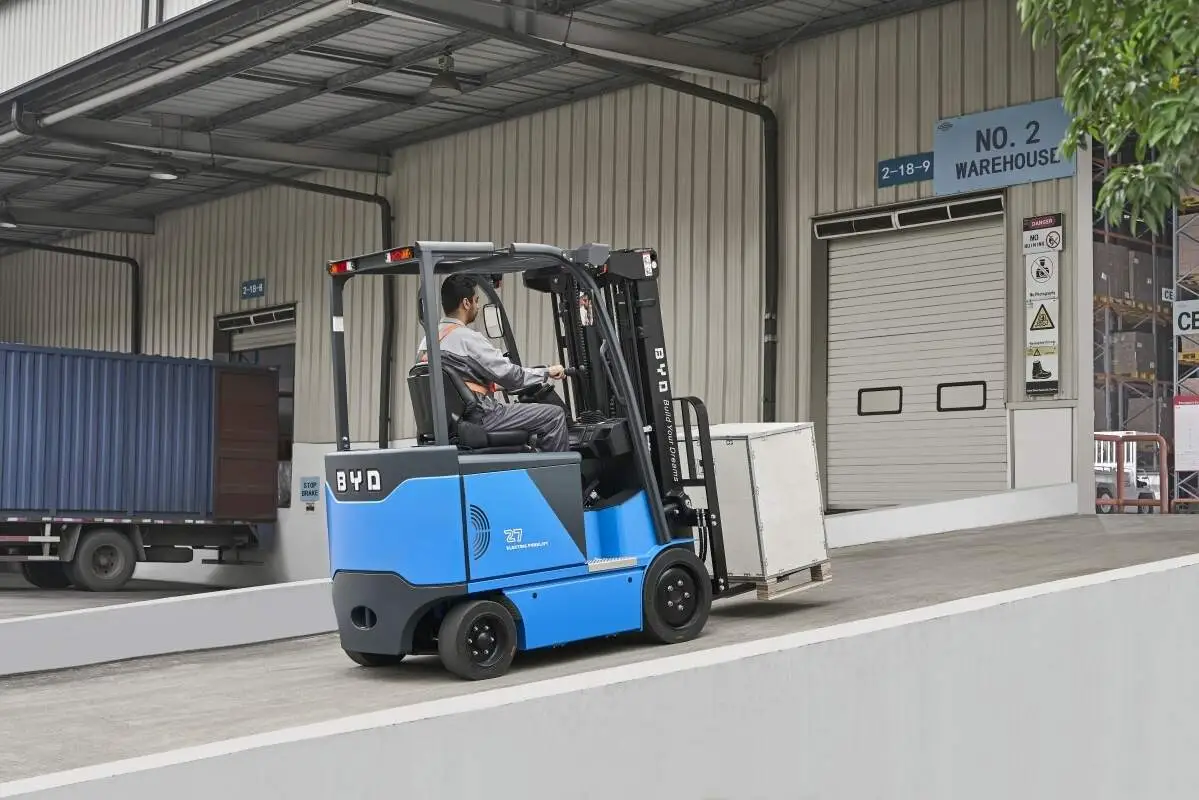
Precautions for charging lithium-ion forklifts: Can they be charged at any time? Is overcharging harmful?(Image1)

Use the original or certified charger to avoid mixing chargers of different brands or models. Before charging, check whether the output voltage and current of the charger match the rated parameters of the battery (such as 48V batteries need to match 48V chargers), and whether the plug and socket are in good contact to avoid local overheating due to poor contact.

#4.3 Charging process monitoring

When charging, someone should be on duty to observe the status of the charger indicator light (if the green light is always on to indicate full, the flashing red light may be a fault). If you find that the battery is heating abnormally (the feel is obviously hot), the charger is smoking or smelling, you need to immediately disconnect the power supply and contact a professional for maintenance.

#4.4 Daily use and maintenance suggestions

Avoid frequent "high current fast charging" and "high current discharge" alternating use, and try to keep the battery power in the range of 30% -70%. When storing the forklift for a long time, it is recommended to replenish the power to 50% every 3 months to prevent the battery from being damaged due to self-discharge.

V. Summary

Whether a lithium battery forklift can be charged at any time depends on the remaining battery power and usage scenarios: in daily operations, as long as the battery is not deeply discharged (> 20%), it can be charged at any time; overcharging will shorten battery life and increase safety hazards Threatening equipment operation. The correct use of lithium battery forklifts requires combining the principle of "shallow charge and shallow release", and doing a good job in environmental monitoring, equipment matching, process management and daily maintenance to maximize battery value and ensure the efficient and safe operation of forklifts.
Telephone

WeChat

Whatsapp

E-mail address

We use cookie to improve your online experience. By continuing to browse this website, you agree to our use of cookie.

Cookies

Please read our Terms and Conditions and this Privacy & Cookie Policy before accessing or using our Services. If you cannot agree with this Policy or the Terms and Conditions, please do not access or use our Services.
If you are located within the European Economic Area (EEA), the United Kingdom or Switzerland (collectively “European Countries”), all processing of your personal data shall be governed by the General Data Protection Regulation (GDPR). If you are located in a jurisdiction outside European Countries, by using our Services, you accept the Terms and Conditions and accept our privacy practices described in this Policy.
As a resident of European Countries, you hold full statutory rights under GDPR: the right to access, rectify and erase your personal data, the right to data portability, the right to object to marketing tracking, the right to withdraw cookie consent at any time, and the right to lodge a complaint with your local data protection authority (DPA).
Your personal data collected via this website will be transferred and stored in China. We execute Standard Contractual Clauses (SCCs) approved by the European Commission to guarantee adequate data protection for European users regarding cross-border personal data transfer.
We may modify this Policy at any time. Minor adjustments will be updated with a new effective date displayed at the top of this document. If we make material changes to how we collect, use or disclose your Personal Information that limit your rights under GDPR, we will provide you with advance notice and obtain your separate explicit consent before implementing such revisions. Updated policy terms will not be retroactively applied to Personal Information collected prior to notification without your written approval.
In addition, we may provide you with real-time pop-up disclosures or supplementary information about the Personal Information handling practices of specific modules of our Services. Such notices shall supplement this Policy and offer you extra choices about how we process your Personal Information.

Cookies & Related Tracking Technologies

Cookies are small text files stored on your device when you access most websites on the internet or open certain marketing emails. For the purpose of this Policy, the term “Cookie” covers all equivalent tracking technologies with identical functions, including HTML tags, tracking pixels, web beacons, local storage and session storage.
Cookies enable our website to recognize your device and record your browsing history when you revisit our site. Typical data collected via Cookies includes your browser type, referral website address, IP address and clickstream behavior (pages viewed, links clicked).
We only automatically load Strictly Necessary Cookies upon your first site visit. All non-necessary Cookies (Functional, Performance, Targeting Cookies) will NOT be activated unless you submit your explicit, affirmative consent via our website cookie banner. You can adjust, restrict or fully withdraw your cookie preferences at any time via the fixed "Cookie Settings" button placed in our website footer, with immediate effect.
We deploy Cookies to simplify website navigation, deliver personalized user experience, supply matched industrial logistics equipment information, analyze website operation data, and deliver targeted BYD electric forklift advertisements across third-party platforms via our authorized marketing partners.
We classify Cookies into four standard categories as required by European ePrivacy regulations:
●  Strictly Necessary Cookies
●  Performance Cookies
●  Functional Cookies
●  Targeting Cookies

Detailed Introduction of Each Cookie Category

Strictly Necessary Cookies

These cookies are indispensable for basic website operation and cannot be fully disabled within our site system. They are only set in response to your voluntary service requests, such as saving your cookie privacy preferences, logging into accounts or filling in inquiry forms. You can configure your browser to block or alert you about these cookies, but core functions of the website will fail to work normally after blocking. These cookies only store temporary session data and do not record any personally identifiable information.

Functional Cookies

These cookies support enhanced personalized website functions, such as remembering your language preference, saved product browsing records and quote information. They may be set by us or trusted third-party service providers embedded on our pages. If you decline these cookies, partial or all personalized service modules cannot operate properly. Functional cookies will be automatically cleared after a maximum storage period of 12 months.

Performance Cookies

We use performance cookies (mainly from Google Analytics) to count visitor volumes and traffic sources, measure and optimize our website operating performance. These cookies help us identify the most and least popular product pages and track visitors’ browsing paths on our site. All data collected by performance cookies is fully aggregated and anonymized without linking to your individual identity, and tracking data will be retained for up to 26 months. If you reject these cookies, we cannot track website operation data or continuously upgrade our service experience for global warehouse and manufacturing clients.

Targeting Cookies

These third-party cookies are deployed through our website by our official advertising partners (Google Ads). The partners may use such cookies to build anonymized interest profiles based on your forklift browsing behavior and push relevant electric forklift promotional adverts on other websites. They do not directly store your personal identifiable information, but rely on unique identifiers of your browser and network device. Targeting cookies are stored for a maximum of 12 months. If you do not allow these cookies, you will only receive generic, non-industry targeted online advertisements. We will never share your complete browsing records with unrelated third parties for irrelevant commercial marketing.

How To Turn Off & Manage Cookies

  1. Adjust consent on our official website: Click the permanent "Cookie Settings" button in the website footer to check, modify or completely withdraw your consent for non-necessary cookies at any time.

  2. Browser privacy control: You can restrict, block or delete all Cookies permanently through your web browser’s privacy settings. Please note that clearing all existing Cookies will reset all your saved preferences on our website.

Restricting or blocking non-necessary Cookies will not stop you from browsing our forklift product catalog, but personalized content and targeted industrial equipment ads will be disabled. If you block Strictly Necessary Cookies, core website functions including inquiry form submission and privacy preference saving will be unavailable.

Cookies within Mobile Applications

We only adopt Strictly Necessary Cookies on our mobile applications. These Cookies are critical to guarantee basic operation of our apps; blocking or deleting them may make you unable to use core app functions. No personal identifiable information will be stored via mobile app Cookies, and app Cookie data will never be shared with other third-party applications installed on your mobile device.

Contact Information

If you have any questions, requests or concerns regarding any clauses in this Privacy & Cookie Policy or the processing of your personal data, please contact our dedicated data handler by email: 17399989919@163.com. You can also reach our professional customer service team via the online contact form available on our official website.